Posted on Leave a comment

Surface Tension

Video Lecture

Surface Tension

SaitechAI — Surface Tension (Class 11) Lecture Notes
SaitechAI

Surface Tension — Class 11 Lecture Notes

Physics (Properties of Fluids) · Rendered with MathJax

1) Concept & Molecular Picture

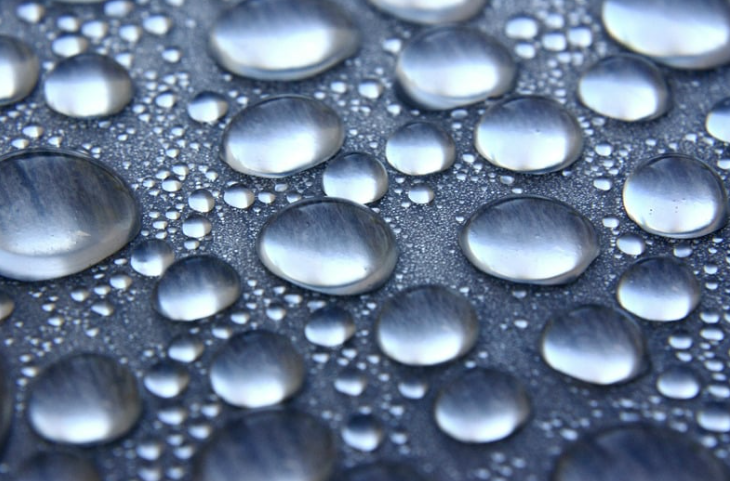
Idea: Molecules at the surface experience a net inward cohesive pull, making the surface behave like a stretched membrane.

  • Cohesion = attraction between molecules of the same liquid.
  • Adhesion = attraction between liquid and a different surface (e.g., glass).
  • Consequences: spherical droplets, meniscus formation, capillarity, soap bubbles, insects walking on water.

2) Definition & Units

Surface tension (also called surface force per unit length) is defined as

$$ T \equiv \frac{F}{L} $$

  • SI unit: \( \mathrm{N\,m^{-1}} \)
  • CGS unit: \( \mathrm{dyne\,cm^{-1}} \)

Surface energy: Work required to increase the surface area by unit amount. In SI, numerical value of surface energy per unit area equals \(T\) (J m\(^{-2}\) ↔ N m\(^{-1}\)).

3) Excess Pressure (Laplace law)

(a) Liquid drop (single interface)

For a spherical drop of radius \(r\):

$$ \Delta P = \frac{2T}{r} \quad \text{(inside higher than outside)} $$

(b) Soap bubble (two interfaces)

For a spherical bubble of radius \(r\):

$$ \Delta P = \frac{4T}{r} $$

These follow from mechanical equilibrium of a curved surface under tension.

4) Capillarity & Angle of Contact

Capillary rise/fall in a tube of radius \(r\):

$$ h = \frac{2T\cos\theta}{\rho g r} $$

  • \(\theta\): angle of contact (acute for wetting liquids like water on glass → rise; obtuse for non-wetting like mercury on glass → fall).
  • \(\rho\): density of liquid, \(g\): acceleration due to gravity.

Meniscus: Concave when adhesion \(>\) cohesion (\(\theta<90^\circ\)); convex when cohesion \(>\) adhesion (\(\theta>90^\circ\)).

5) Temperature & Impurities

  • \(T\) decreases with temperature. Empirically: $$ T(T_{\text{abs}}) \approx T_0 \big(1 – k\,T_{\text{abs}}\big), \quad k>0. $$ \(T \to 0\) near the critical temperature.
  • Surface-active agents (soaps/detergents) reduce \(T\) and enhance wetting/cleaning.
  • Gas above liquid (air vs another immiscible liquid) also affects the measured \(T\).

6) Work & Energy at Surfaces

To create new area \( \Delta A \) at constant \(T\):

$$ W = T\,\Delta A, \qquad \text{so} \quad \frac{dW}{dA} = T. $$

Interpretation: \(T\) is the surface free energy per unit area (isothermal, reversible addition of area).

7) Typical Surface Tension Values (at ~20–25 Â°C)

LiquidApprox. \(T\) (N m\(^{-1}\))Remarks
Water0.072High; strong hydrogen bonding
Alcohol (ethanol)~0.022Lower than water
Glycerol~0.063Viscous, relatively high \(T\)
Mercury~0.485Very high; poor wetting on glass
Soap solution~0.025–0.040Reduced by surfactants

Values are indicative for classroom use; exact values depend on temperature and purity.

8) Illustrative Examples

Ex. 1 — Excess pressure in soap bubble

For a bubble of radius \( r = 1.0\,\text{mm} \) with \( T = 0.030\,\mathrm{N\,m^{-1}} \):

$$ \Delta P = \frac{4T}{r} = \frac{4\times 0.030}{1.0\times 10^{-3}} = 120\,\text{Pa}. $$

Ex. 2 — Capillary rise of water

\( r = 0.50\,\text{mm},\; T = 0.072\,\mathrm{N\,m^{-1}},\; \rho = 1000\,\mathrm{kg\,m^{-3}},\; \theta \approx 0^\circ \):

$$ h = \frac{2T\cos\theta}{\rho g r} = \frac{2 \times 0.072 \times 1}{1000 \times 9.8 \times 0.5\times 10^{-3}} \approx 0.029\,\text{m} \;=\; 2.9\,\text{cm}. $$

9) Quick Checks

  1. State the SI unit of surface tension and surface energy per unit area.
    Ans: Both numerically \( \mathrm{N\,m^{-1}} \) (and \( \mathrm{J\,m^{-2}} \) for surface energy).
  2. Why does mercury form a convex meniscus in glass?
    Ans: Cohesion \( \gt \) adhesion ⇒ \( \theta > 90^\circ \).
  3. Show that \( h \propto \dfrac{1}{r} \) for a wetting liquid in a capillary.
    Ans: From \( h=\dfrac{2T\cos\theta}{\rho g r} \) with \(T,\theta,\rho,g\) fixed.

10) Common Applications

  • Cleaning action of soaps/detergents (reduced \(T\) improves wetting).
  • Capillary action in plant xylem; wicks in lamps and pens.
  • Drop formation, emulsions/foams stabilization with surfactants.
  • Coating & printing processes (wetting, spread, leveling depend on \(T\) and \(\theta\)).
Formula Sheet (at a glance)
  • \( T = \dfrac{F}{L} \)
  • \( \Delta P_{\text{drop}} = \dfrac{2T}{r} \), \(\;\Delta P_{\text{bubble}} = \dfrac{4T}{r} \)
  • \( h = \dfrac{2T\cos\theta}{\rho g r} \)
  • \( W = T\,\Delta A \)

© SaitechAI — Prepared for Class 11 learners. You may print or save this page for study use.

Capillarity

Lecture Notes

Worksheet in Surface Tension, Surface Energy, Capillarity, contact angle, pressure inside the soap bubble.

Worksheet set-2

Worksheet set-3

Question
Question Image Question Image
SaitechAI

Doubt Clinic Worksheets

Question Number 6 in worksheet set-2

Posted on Leave a comment

Who am I?

System

Who am I? The simple answer is that I am the SYSTEM.

In thermodynamics, there are some important terms viz., system, surrounding, boundary, process etc.

System is the portion of the Universe under observation. So, I am also the system. The remaining space of the system is called surrounding. Boundary separates system and surruonding. I too have surrounding and that is my world.

Process

When the system undergoes some changes with respect to time, it is called process. I am also undergoing some changes as the time goes. So, I undergo various processes viz., growth, learning, experiencing etc.

Types of system

Based on the nature of the boundary the system can be classified as follows.

  • open system
  • closed system
  • isolated system.

Open System

Open system is like a cup of hot coffee kept without lid. It looses its mass and heat by physical interaction with the surrounding. I also have awakeness (Jakrat) during day time. I have lot of physical and mental interactions with the world.

Closed System

Closed system is similar to a cup of hot coffee with lid. It may loose its heat but there is no mass transfer. I too have the similar situtation in my dream (Swapna) where I do not physically interact with the world but mentally I do a lot.

Isolated System

In an ioslated system like a hot coffee kept in ideal vacuum flask, neither mass transfer nor heat transfer takes place. I do not have any physical and mental interaction with the world during my deep sleep (sushupthi).

Gold is one, ornaments are many like ring, necklace, chain, …

Current is one, appliances are many like fan, light, heater, …

I is one, it is absolute (Turiya). We are many like you, I, he, she, it, they, Ragu, Ravi, Ram, Balu, Usha, Kala, Abdul, George, Sophia …..

I am the oberserver ! I am the absolute (Turiya) !! I just enact according to the code instructed and sometimes designed by myself!! I am not susceptible to external stimuli (influences)! I do not have pain! I do not have struggle! I live everywhere when I realize myself. I love everyone when I realize myself. I dwelve in everybeing when I realize myself. I do not have caste! I do not have religion! I do not have language! I do not have gender bias!! I do not have taste! I do not have feelings!

I is one; it is available as many differential elements!!

Integrate and Improve the overall system and surroundings!

References

My concept map notes based on the above video.

This image has an empty alt attribute; its file name is image-129.png

Posted on Leave a comment

Newton’s Universal Law of Gravitation

Level: Class 9, CBSE, Physics, Gravitation

Newton’s law of Gravitation
  • Universal law of gravitation by Newton
  • Let us consider two masses, m1 and m2.
  • The distance between the centres of the two masses is r.
  • Force, F is directly proportional to mass 1 and mass 2.
  • F is inversely proportional to the square of the distance between the two masses.
  • Let us combine these two relations.
  • To remove the proportionality, we have to introduce a constant.
  • The proportionality constant is G.
  • G = Gravitational Constant
  • We can derive the unit of Gravitational constant as shown here.
  • The value of Gravitational Constant, G = 6.67 x 10⁻¹¹ Nm2kg-2
Posted on Leave a comment

Light

Topic tree – Level STD 7 – IGCSE Science

Drawings by Himesh, STD 07

  1. How light travels
  2. How shadows form
  3. How reflections form
  4. How light bends
  5. The spectrum of white light
  6. Coloured light

HOW LIGHT TRAVELS

Sources of lightObject that emits its own light is called light source.
e.g. flames, Sun, bulb
Straight linesLight travels in straight line. e.g. Sun rays
Luminous and
non-luminous
An object that acts as source of light – luminous
An object that does not act as source of light,
it reflects light to our eyes – non-luminous

HOW SHADOWS FORM

  • Types of material
    1. Transparent – light passes straight through the object
    2. Opaque – The light is absorbed by the object, the light may bounce off the object, the material gets slightly warmer.
    3. Translucent – semitransparent – partly transparent and partly opaque
  • Forming a shadow
    1. Shadow is formed when an opaque object blocks the light.
    2. Because, the light travels in straight line.
    3. Shadows change during the day as the Sun moves across the sky.
    4. Their direction and size change.
  • Rays of light
    1. A ray is a straight line which shows the path of light.
    2. A shadow forms when an opaque object blocks light.

HOW REFLECTIONS FORM

  • Bouncing of light
    1. A mirror gives a clear image of the object kept in front of it.
    2. Mirrors reflect light. It gives clear image of the object kept in front of it. Because, it has flat and smooth surface. Rays of light bounce off a mirror without being scattered. All reflected rays are in the same direction.
  • White paper also reflects light. But, it does not give clear image. Because, it has rough surface. When the light falls on it, they are scattered in all directions.
  • Predicting the path of light
    1. The law of reflection – angle of incidence = angle of reflection
    2. The mirror is represented by a straight line shaded on one side which indicates the non-reflecting surface.

HOW LIGHT BENDS

  • Transparent materials
    1. Water and glass are transparent materials.
    2. Light can pass through them, but the direction of light ray is changed when it enters or exits a transparent material.
    3. Change of direction of light when it travels from one medium to another is called refraction.
  • Rays changing direction
    1. A light ray bends towards the normal when it passes from air into a transparent material.
    2. The light ray bends away from the normal when it passes from a transparent material into air.
  • The hidden coin
    1. A coin is placed in the bottom of a can.
    2. It is visible from the top.
    3. But, when we mover our head near the rim of the can, the coin disappears.
    4. When we pour water and again check the coin, it appears again!
    5. This feature is explained by bending of light when it travels through another medium, here it is the water poured.

SPECTRUM OF WHITE LIGHT

  • Splitting light
    1. White light is made up of all colours of the spectrum from red to violet.
    2. VIBGYOR – Violet, Indigo, Blue, Green, Yellow, Organe and Red
    3. Splitting of white light into separate colours is called dispersion.
    4. E.g. Rainbow colours, spectrum obtained from prism
    5. Prism is a triangular glass block.
  • Dispersion