Posted on Leave a comment

Semiconductors

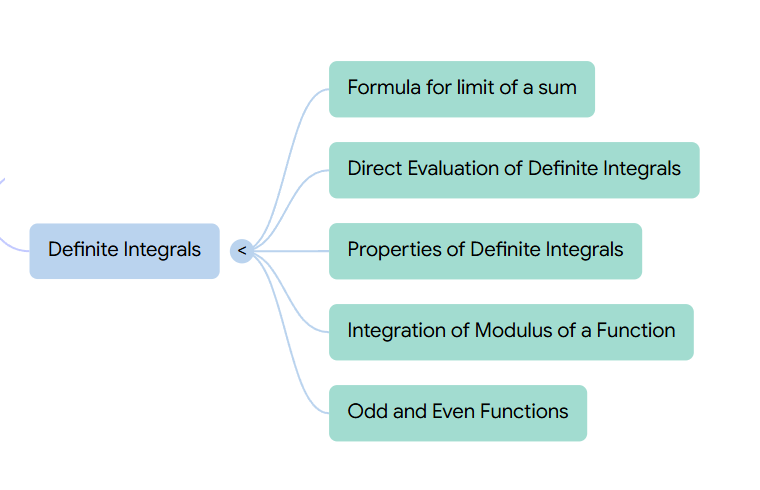
Topic Tree (Ignore Deleted Portions)

Semiconductor Devices

├── Semiconductors
│ ├── Intrinsic
│ │ └── Pure Semiconductor
│ ├── Extrinsic
│ │ └── p-type and n-type Semiconductor
│ ├── Valence Band
│ ├── Conduction Band
│ ├── Energy Gap
│ ├── PNP
│ │ └── CE mode
│ └── NPN
│ ├── CB mode
│ └── CC mode

├── Transistors
│ (linked from Semiconductor → PNP/NPN structure)

├── Junction Diodes
│ ├── PN-Junction Diode
│ │ ├── Potential Barrier and Field
│ │ ├── Depletion Region
│ │ └── Rectifier (Half Wave & Full Wave)
│ │ └── Filter
│ ├── Zener Diode
│ │ ├── I–V Characteristics
│ │ └── Voltage Regulator
│ ├── Photo Diode
│ └── LED

└── Logic Gates
├── NAND
├── AND
├── OR
├── NOR
└── NOT

SaitechAI • Electronics Lecture Cards (Compact)

SaitechAI • Electronics Lecture Cards

Energy Bands → Semiconductors → PN Junction → Biasing → Rectifiers

EB

Energy Band Theory

VB • CB • Forbidden gap (Eg)
Concept
  • In crystals, atomic levels spread into bands.
  • VB: highest filled, CB: next higher; Eg has no states.
  • Fermi level EF: 50% occupancy at equilibrium.
Conductor SemiconductorEg Insulator Conduction requires carriers + empty states near EF
CMP

Conductors vs Semiconductors vs Insulators

σ(T), carriers, EF
PropertyConductorSemiconductorInsulator
Band pictureVB overlaps CBSmall Eg (~0.7–3 eV)Large Eg (>~5 eV)
CarriersElectronse⁻ & h⁺Bound
σ vs T↓ with T↑ with T≈0
Why σ↑ with temperature in semiconductors? Thermal energy generates e⁻–h⁺ pairs (VB→CB), increasing carrier density.
SC

Intrinsic & Extrinsic Semiconductors

Fermi level shift • Majority carriers
  • Intrinsic: n = p = ni, EF ≈ mid-gap; σ = q(nμn+pμp).
  • n-type: donors → electrons majority; EF ↑ toward CB.
  • p-type: acceptors → holes majority; EF ↓ toward VB.
  • Mass action: np=ni2.
Intrinsic EF n-type EF
PN

PN Junction • Equilibrium

Depletion region • Vbi
  • Diffusion leaves fixed ions → depletion with built-in potential Vbi.
  • Equilibrium: drift current = diffusion current.
Vbi = (kT/q) ln(NaNd/ni2)
pn Depletion
FB

Forward Bias

Diode equation & knee
  • p→+, n→− lowers barrier, width ↓, large I after threshold.
  • I = Is(e^{VD/(nVT)} − 1)
  • VT≈25.9 mV @ 300 K; n≈1–2.
+
RB

Reverse Bias

Leakage • Breakdown
  • p→−, n→+ raises barrier; I ≈ Is (tiny) till breakdown.
  • Zener/avalanche at high |VR|.
HWR

Half-Wave Rectifier

Single diode • High ripple
  • Average DC: Vdc=Vm; Ripple factor ≈1.21; η ≈40.6%; PIV =Vm.
R
FWR

Full-Wave Rectifier

Bridge • Low ripple
  • Average DC: Vdc=2Vm; Ripple ≈0.482; η ≈81.2%.
  • PIV: bridge Vm, centre-tap 2Vm.
R
QP

Quick Practice

Check-your-understanding
  1. Why do insulators show negligible conductivity at room temperature?
  2. In B-doped Si, identify majority/minority carriers.
  3. Write diode I–V equation and define symbols.
  4. Bridge FWR with Vm=12 V → Vdc?
  5. Define PIV; give values for HWR and centre-tap FWR.
Answers
  • Large Eg, no states near EF, no free carriers.
  • p-type: holes majority; electrons minority.
  • I = Is(e^{VD/(nVT)}−1); Is: saturation, n: ideality, VT=kT/q.
  • Vdc=2Vm/π≈7.64 V.
  • HWR: Vm; centre-tap FWR: 2Vm.
SUM

One-Page Summary

From bands to rectifiers
  • Metals: band overlap; Semis: small Eg; Insulators: large Eg.
  • Doping shifts EF, sets majority carriers.
  • PN junction: depletion + Vbi; bias controls barrier/current.
  • Rectifiers: HWR (simple, high ripple) vs FWR (better DC, lower ripple).
Attribution: SaitechAI

Interactivities

Word Search

Cross Word Puzzle

Posted on Leave a comment

Amines and Carbonyl compounds – Target Practice Questions

Scope: Amines – 6 x 5 marks

Aldehydes, ketones, carboxylic acids: 6 x 5 marks

Total = 60 marks

To complete in 120 minutes. and report in whatsapp.

Saitech Target Practice — Question Paper Card
🎯 Saitech Target Practice — Question Paper Timer Enabled Each Q = 5 marks • Max = 60
00:00
Open Paper
Answer Key: Open Solutions

Posted on Leave a comment

Concave and Convex Mirrors Worksheet

Concept

A concave mirror is a part of a sphere with reflecting surface on the inner side. Parallel rays near the principal axis converge to the focal point , lying at a distance  from the pole . Center of curvature is  with radius .

Worksheet

SaitechAI • Concave Mirror – Concept & Worksheet (MathJax Enabled)

Concave Mirror – Concept & Application Worksheet

Mirror formula • Cartesian sign convention • Magnification • Practice problems (solutions hidden)

Concept

Concave (Converging) Spherical Mirror

A concave mirror is a part of a sphere with reflecting surface on the inner side. Parallel rays near the principal axis converge to the focal point \(F\), lying at a distance \(f\) from the pole \(P\). Center of curvature is \(C\) with radius \(R\).

  • Focal length: \( f = \dfrac{R}{2} \)
  • Magnification: \( m = \dfrac{h_i}{h_o} = \dfrac{v}{u} \)
  • Image nature: Depends on object position (beyond \(C\), at \(C\), between \(C\) and \(F\), at \(F\), between \(F\) and \(P\)).
Formula

Mirror Formula

For paraxial rays (small aperture), object distance \(u\), image distance \(v\), focal length \(f\):

\(\displaystyle \frac{1}{f}=\frac{1}{v}+\frac{1}{u}\)

Linear magnification: \(m=\dfrac{v}{u}\). For real inverted images, \(m<0\); for virtual erect images, \(m>0\).

Convention

Cartesian Sign Convention

  • Principal axis is the positive x-axis to the right; pole \(P\) at origin.
  • Distances measured towards the light (incident side, left of mirror) are negative.
  • Distances measured to the right of the mirror are positive.
  • For concave mirror: \(f\) and \(R\) are negative.
  • Heights above axis positive; below axis negative.
How to Solve

Quick Procedure

  1. Assign signs to \( (u, v, f) \) using the convention.
  2. Apply \( \left( \frac{1}{f} = \frac{1}{v} + \frac{1}{u} \right) \) to find the unknown distance(s).
  3. Use \( \left( m = \frac{v}{u} = \frac{h_i}{h_o} \right) \) for size relation, if needed.
  4. Conclude nature: real/virtual (sign of \( v \)), erect/inverted (sign of \( m \)).
Worksheet

Practice Problems (NCERT/AI – adapted)

6) An object is placed before a concave mirror of focal length 15 cm. The image is three times the size of the object. Find the two possible object distances from the mirror.

\(m = \frac{v}{u} = -3\) or \(+3\). Mirror formula \( \frac{1}{f} = \frac{1}{v} + \frac{1}{u}\), \(f = -15\).
For \(m = -3\): \(u = \frac{(1+m)}{m}f = \frac{(1-3)}{-3}(-15) = -10\) cm, \(v = mu = -30\) cm.
For \(m = +3\): \(u = \frac{(1+m)}{m}f = \frac{4}{3}(-15) = -20\) cm, \(v = +60\) cm.
Hence possible object distances: **10 cm and 20 cm** in front of mirror.

7) A convex rear-view mirror of radius 2 m shows a jogger approaching at 5 m/s. Find the speed of the image when the jogger is at (a) 39 m (b) 29 m.

\(f = +1\) m, \(u = -x\). \(v = \frac{fu}{u-f} = \frac{x}{x+1}\). Differentiate: \(\frac{dv}{dt} = \frac{1}{(x+1)^2}\frac{dx}{dt}\). \(dx/dt=-5\).
(a) \(x=39 \Rightarrow |dv/dt| = \frac{5}{40^2}=3.1\text{ mm/s}\); (b) \(x=29 \Rightarrow 5.6\text{ mm/s}\).

8) A mobile phone along the principal axis of a concave mirror forms distorted images. Explain why magnification is non-uniform.

Each point on the phone lies at different \(u_i\). Since \(1/f=1/v_i+1/u_i\), each part forms at different \(v_i\). So \(m_i = v_i/u_i\) varies along the length → non-uniform magnification → distortion.

9) Find object distance from a concave mirror (R = 20 cm) for a real image of magnification 2.

\(f = -10\) cm, \(m = -2\). \(v = mu = -2u\). \(1/f = 1/v + 1/u = 1/(-2u)+1/u = 1/(2u)\Rightarrow u=-5\) cm, \(v=-10\) cm. Hence image real and magnified.

10) Derive the mirror formula using a ray diagram for a concave mirror forming a real magnified image.

Using geometry of similar triangles \( \triangle A’B’F \sim \triangle ABF \): \( \frac{AB}{A’B’} = \frac{BF}{B’F} \Rightarrow \frac{1}{f}=\frac{1}{v}+\frac{1}{u}\).

11) (a) Draw ray diagram for real, inverted, magnified image by concave mirror. (b) Write mirror formula and magnification.

(a) Object between \(C\) and \(F\) → image beyond \(C\), inverted and magnified.
(b) \( \frac{1}{f}=\frac{1}{v}+\frac{1}{u},\quad m=\frac{h_i}{h_o}=\frac{v}{u}. \)
SaitechAI • Physics Worksheet • Click “Show / Hide Solution” to reveal answers.

SaitechAI • Convex Mirror – Concept Notes
Physics Notes

Convex Mirror – Concept and Key Points

1. Definition

A convex mirror is a spherical mirror whose reflecting surface is bulged outward. It diverges the rays of light that fall on it and hence it is also called a diverging mirror.

2. Focal Length and Radius of Curvature

  • Centre of curvature \( C \) lies behind the mirror.
  • Focal point \( F \) also lies behind the mirror.
  • For convex mirror, both \( f \) and \( R \) are taken as positive according to the Cartesian sign convention.
  • Relationship: \( f = \dfrac{R}{2} \)

3. Mirror Formula

The same mirror equation applies: \[ \frac{1}{f} = \frac{1}{v} + \frac{1}{u} \] where \( f \) = focal length, \( u \) = object distance, \( v \) = image distance.

4. Sign Convention (Cartesian)

  • Distances measured opposite to the direction of incident light are negative.
  • Distances measured along the direction of incident light are positive.
  • For a convex mirror: \( f > 0 \), \( R > 0 \), \( u < 0 \), \( v > 0 \).

5. Image Characteristics

When an object is placed anywhere in front of a convex mirror:

  • The image is always virtual (formed behind the mirror).
  • It is erect and diminished.
  • The image always lies between \( F \) and the pole \( P \).

6. Ray Diagram Explanation

  • Ray parallel to principal axis → appears to diverge from the focus \( F \).
  • Ray directed towards centre of curvature \( C \) → reflected back along the same path (appears to meet at \( C \)).
  • The intersection (virtual) of reflected rays gives the image position behind the mirror.

7. Magnification

Linear magnification \( m \) is given by: \[ m = \frac{h_i}{h_o} = \frac{v}{u} \] For convex mirror, \( v \) is positive and \( u \) negative, hence \( m \) is positive and less than 1, implying an erect and diminished image.

8. Uses

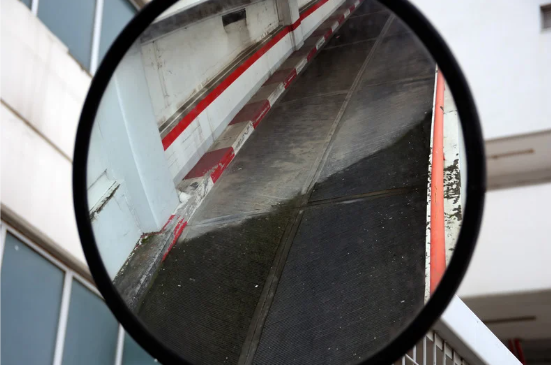
  • Used as rear-view mirrors in vehicles (gives wider field of view).
  • Used in security and surveillance mirrors.
  • Used in hallways and shops to monitor movement.

9. Quick Summary

PropertyConvex Mirror
TypeDiverging
Position of ImageBehind the mirror
NatureVirtual, erect
SizeDiminished
Sign of fPositive

Concave and Convex Mirrors Calculator

Click here for online calculator

Posted on Leave a comment

Isothermal Reversible Expansion worksheet

Problem Statement:

(i) Given:
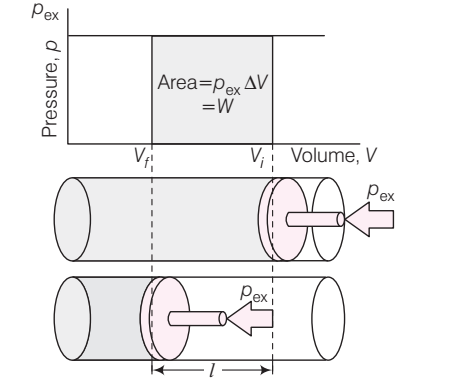
5.2 mol of an ideal gas at 3 atm and 25 °C (298 K) expands isothermally to three times its original volume against an external pressure of 1 atm.
Find the work done (W) by the gas.

(ii) If the same gas expands isothermally and reversibly, determine the work done in that case.

Isothermal Expansion Work — Worked Example

Isothermal Expansion Work — Problem & Solution

Ideal gas at 25 °C (298 K)

Problem

  1. Given: 5.2 mol of an ideal gas at 3 atm and 25 °C expands isothermally to three times its original volume against a constant external pressure of 1 atm.
    Calculate the work done by the gas.
  2. If the same gas expands isothermally and reversibly, what is the work done?

Key Relations

Irreversible (constant external pressure):  \( w = -\,P_{\text{ext}}(V_2 – V_1) \)
Reversible isothermal (ideal gas):  \( w_{\text{rev}} = -\,nRT \ln\!\left(\dfrac{V_2}{V_1}\right) = -\,nRT \ln\!\left(\dfrac{P_1}{P_2}\right) \)
(or \( w_{\text{rev}} = -\,2.303\,nRT\,\log_{10}\!\left(\dfrac{V_2}{V_1}\right) \))

Use \(R=0.082\ \text{L·atm mol}^{-1}\text{K}^{-1}\) when working in L·atm, and \(1\ \text{L·atm}=101.325\ \text{J}\). Temperature \(T=298\ \text{K}\).

Solution (i) — Irreversible Expansion against 1 atm

Show steps

Initial volume from ideal gas law \(V_1=\dfrac{nRT}{P}\):

\( V_1=\dfrac{5.2\times 0.082\times 298}{3}=42.35\ \text{L} \)

Final volume: \( V_2 = 3V_1 = 3\times 42.35 = 127.05\ \text{L} \)

Work: \( w=-P_{\text{ext}}(V_2-V_1) = -1(127.05-42.35) = -84.7\ \text{L·atm} \)

Convert to joules: \( w = -84.7\times 101.325 = -8582.22\ \text{J} \)

Answer (i): \( \boxed{w=-8.58\ \text{kJ}} \) (negative for expansion)

Solution (ii) — Reversible Isothermal Expansion

Show steps

Volume ratio \( \dfrac{V_2}{V_1}=3 \Rightarrow \log_{10}(3)=0.4771 \)

\( w_{\text{rev}}=-\,2.303\times 5.2\times 8.314\times 298\times 0.4771 = -14156.38\ \text{J} \)

Answer (ii): \( \boxed{w_{\text{rev}}=-14.16\ \text{kJ}} \) (more work in magnitude; reversible path is maximum work)

Comparison

ProcessExpressionResult (J)Result (kJ)
Irreversible (1 atm ext.) \(w=-P_{\text{ext}}(V_2-V_1)\) \(-8582.22\) \(-8.58\)
Reversible isothermal \(w_{\text{rev}}=-nRT\ln(V_2/V_1)\) \(-14156.38\) \(-14.16\)

For a given \(T,n\), reversible expansion gives the largest magnitude of work.

Isothermal Reversible Expansion Work — Worksheet (with Hidden Solutions)

Isothermal Reversible Expansion Work — Theory & Worksheet

Ideal-gas, isothermal, reversible path. Hidden solutions included.

Topic: Thermodynamics Level: UG/Entrance/Industry QC Assumptions: Ideal gas, T constant

Quick Theory

For an ideal gas undergoing isothermal (T = const) reversible expansion/compression from \(V_1 \to V_2\):
\[ w = – \int_{V_1}^{V_2} P_{\text{ext}}\, dV = – \int_{V_1}^{V_2} \frac{nRT}{V}\, dV = -nRT \ln\!\left(\frac{V_2}{V_1}\right) \] Using \(PV=nRT\), the pressure form is \(\displaystyle w=-nRT\ln\!\left(\frac{P_1}{P_2}\right)\).
  • Sign convention (Chemistry): \(w < 0\) for expansion (system does work), \(w > 0\) for compression.
  • Units: Use \(R=8.314\ \text{J mol}^{-1}\text{K}^{-1}\) with \(T\) in K for \(w\) in J. Alternatively \(R=0.082057\ \text{L·atm mol}^{-1}\text{K}^{-1}\) and then convert \(1\ \text{L·atm} = 101.325\ \text{J}\).
  • Logs: Natural log only. If you must use \(\log_{10}\), then \(\ln x = 2.303 \log_{10}x\).
  • First Law note: For isothermal ideal gas, \(\Delta U=0\Rightarrow q=-w\).

Reversible path means \(P_\text{ext}\) differs infinitesimally from \(P_\text{gas}\), so \(P_\text{ext}=\frac{nRT}{V}\) along the path.

Worksheet — 10 Problems

Isothermal expansion, volumes given

\(n=1.00\ \text{mol},\ T=298.15\ \text{K},\ V_1=2.00\ \text{L},\ V_2=5.00\ \text{L}\). Find \(w\).

Show solution

\(\displaystyle \frac{V_2}{V_1}=2.500,\ \ln\!\left(\frac{V_2}{V_1}\right)=0.916291\)

\(\displaystyle w=-nRT\ln\!\left(\frac{V_2}{V_1}\right)=-1.00\times 8.314\times 298.15\times 0.916291=-2\,271\ \text{J}=-2.271\ \text{kJ}\) (expansion → \(w<0\))

Doubling volume at elevated temperature

\(n=0.50\ \text{mol},\ T=350.00\ \text{K},\ V_1=1.20\ \text{L},\ V_2=2.40\ \text{L}\). Find \(w\).

Show solution

\(\displaystyle \frac{V_2}{V_1}=2.000,\ \ln=0.693147\)

\(\displaystyle w=-0.50\times 8.314\times 350.00\times 0.693147=-1\,009\ \text{J}=-1.009\ \text{kJ}\)

Scaling with moles

\(n=2.00\ \text{mol},\ T=300.00\ \text{K},\ V_1=10.00\ \text{L},\ V_2=20.00\ \text{L}\). Find \(w\).

Show solution

\(\displaystyle \frac{V_2}{V_1}=2.000,\ \ln=0.693147\)

\(\displaystyle w=-2.00\times 8.314\times 300.00\times 0.693147=-3\,458\ \text{J}=-3.458\ \text{kJ}\)

Isothermal compression

\(n=1.50\ \text{mol},\ T=325.00\ \text{K},\ V_1=3.00\ \text{L},\ V_2=1.50\ \text{L}\). Find \(w\).

Show solution

\(\displaystyle \frac{V_2}{V_1}=0.500,\ \ln=-0.693147\)

\(\displaystyle w=-1.50\times 8.314\times 325.00\times (-0.693147)=+2\,810\ \text{J}=+2.810\ \text{kJ}\) (compression → \(w>0\))

Mild expansion at near-ambient temperature

\(n=0.75\ \text{mol},\ T=290.00\ \text{K},\ V_1=1.80\ \text{L},\ V_2=4.50\ \text{L}\). Find \(w\).

Show solution

\(\displaystyle \frac{V_2}{V_1}=2.500,\ \ln=0.916291\)

\(\displaystyle w=-0.75\times 8.314\times 290.00\times 0.916291=-1\,657\ \text{J}=-1.657\ \text{kJ}\)

Large expansion, higher T

\(n=3.00\ \text{mol},\ T=400.00\ \text{K},\ V_1=5.00\ \text{L},\ V_2=15.00\ \text{L}\). Find \(w\).

Show solution

\(\displaystyle \frac{V_2}{V_1}=3.000,\ \ln=1.098612\)

\(\displaystyle w=-3.00\times 8.314\times 400.00\times 1.098612=-10\,961\ \text{J}=-10.961\ \text{kJ}\)

Isothermal compression to half the volume

\(n=1.00\ \text{mol},\ T=298.15\ \text{K},\ V_1=1.00\ \text{L},\ V_2=0.50\ \text{L}\). Find \(w\).

Show solution

\(\displaystyle \frac{V_2}{V_1}=0.500,\ \ln=-0.693147\)

\(\displaystyle w=-1.00\times 8.314\times 298.15\times (-0.693147)=+1\,718\ \text{J}=+1.718\ \text{kJ}\)

Small sample expansion

\(n=0.25\ \text{mol},\ T=310.00\ \text{K},\ V_1=0.80\ \text{L},\ V_2=1.60\ \text{L}\). Find \(w\).

Show solution

\(\displaystyle \frac{V_2}{V_1}=2.000,\ \ln=0.693147\)

\(\displaystyle w=-0.25\times 8.314\times 310.00\times 0.693147=-447\ \text{J}=-0.447\ \text{kJ}\)

Compression at 0 °C

\(n=1.80\ \text{mol},\ T=273.15\ \text{K},\ V_1=12.00\ \text{L},\ V_2=6.00\ \text{L}\). Find \(w\).

Show solution

\(\displaystyle \frac{V_2}{V_1}=0.500,\ \ln=-0.693147\)

\(\displaystyle w=-1.80\times 8.314\times 273.15\times (-0.693147)=+2\,834\ \text{J}=+2.834\ \text{kJ}\)

Triple the volume at room temperature

\(n=0.60\ \text{mol},\ T=298.15\ \text{K},\ V_1=2.50\ \text{L},\ V_2=7.50\ \text{L}\). Find \(w\).

Show solution

\(\displaystyle \frac{V_2}{V_1}=3.000,\ \ln=1.098612\)

\(\displaystyle w=-0.60\times 8.314\times 298.15\times 1.098612=-1\,634\ \text{J}=-1.634\ \text{kJ}\)

Pressure-Form Practice (Tip)

If pressures are given instead of volumes, use \[ w = -nRT \ln\!\left(\frac{P_1}{P_2}\right) \] because for ideal gases \( \frac{V_2}{V_1} = \frac{P_1}{P_2} \) at constant \(T\) and \(n\).

Be sure pressure ratio is consistent with the physical change: expansion has \(P_2<P_1\) so \(\ln(P_1/P_2)>0\Rightarrow w<0\).

Self-Check

  • If \(V_2 > V_1\), your answer must be negative.
  • If \(V_2 < V_1\), your answer must be positive.
  • Magnitude grows with \(n\), \(T\), and \(|\ln(V_2/V_1)|\).

This worksheet assumes ideal-gas behavior and a perfectly reversible path. For real gases or finite-step external pressure changes, the integral and result differ.

PV Plot

Posted on Leave a comment

Worksheet in Bubbles in Surface Tension

A drop of water of diameter 0.2 cm is broken up into 27,000 droplets of equal volumen. How much work will be done against surface tension in the process? (ST. = 7 x 10^-2 N/m)

Example Problem

SaitechAI Worksheet – Surface Tension Work (Droplet Splitting)

SaitechAI Worksheet

Topic: Work done against surface tension when a single drop splits into many droplets (Equal-volume droplets)
10 Questions × 2 marks = 20
Timer
Start:
End:
Duration:
  • Assume spherical drops. Volume conserved: \( n\frac{4}{3}\pi r^3=\frac{4}{3}\pi R^3 \Rightarrow r=\dfrac{R}{n^{1/3}}\).
  • Surface-area change: \( \Delta A = 4\pi R^2\left(n^{1/3}-1\right)\).
  • Work against surface tension: \( W=\sigma\,\Delta A \). Use SI units (R in m).
  • Show steps in the answer box. Toggle Key to verify.
Score: 0/20

Q1. A water drop of diameter 2 mm is broken into 1000 equal droplets. Surface tension = 0.072 N m−1. Find the work done.

Marks:
Key: \(R=1\times10^{-3}\,\text{m},\ n=10^3\Rightarrow n^{1/3}=10\). \(\Delta A=4\pi R^2(10-1)=36\pi\times10^{-6}\,\text{m}^2\). \(W=\sigma\Delta A=0.072\times36\pi\times10^{-6}\approx \boxed{8.143\times10^{-6}\,\text{J}}\).

Q2. A mercury drop of radius 0.8 cm is sprayed into \(10^5\) equal droplets. Surface tension = 0.465 N m−1. Energy required?

Marks:
Key: \(R=8.0\times10^{-3}\,\text{m},\ n^{1/3}\approx46.416\). \(\Delta A=4\pi R^2(n^{1/3}-1)\). \(W\approx \boxed{1.698\times10^{-2}\,\text{J}}\).

Q3. A water drop of radius 0.2 cm splits into 27,000 equal droplets. Surface tension = 0.070 N m−1. Compute the work.

Marks:
Key: \(R=2.0\times10^{-3}\,\text{m},\ n^{1/3}=30\). \(\Delta A=4\pi R^2(29)\). \(W=\sigma\Delta A\approx \boxed{1.020\times10^{-4}\,\text{J}}\).

Q4. A soap solution (σ = 0.025 N m−1) drop of diameter 1 cm is atomized into 8000 equal droplets. Work done?

Marks:
Key: \(R=5.0\times10^{-3}\,\text{m},\ n^{1/3}=20\). \(\Delta A=4\pi R^2(19)\). \(W\approx \boxed{1.492\times10^{-4}\,\text{J}}\).

Q5. A glycerine drop of radius 0.5 cm is broken into \(10^6\) equal droplets. σ = 0.063 N m−1. Energy?

Marks:
Key: \(R=5.0\times10^{-3}\,\text{m},\ n^{1/3}=100\). \(\Delta A=4\pi R^2(99)\). \(W\approx \boxed{1.959\times10^{-3}\,\text{J}}\).

Q6. A water drop of diameter 3 mm splits into 125 equal droplets. σ = 0.072 N m−1. Work done?

Marks:
Posted on Leave a comment

Concave and Convex Mirrors

Worksheet

Class 12 Physics – Ray Optics Worksheet (Mirrors)

Worksheet • Class 12 Physics (Ray Optics)

Topic: Ray Diagrams of Concave & Convex Mirrors • Focus: key terms, R–f relation, image formation
Subject: Physics Grade: 12 Questions: 12 Weightage: 2 marks each Time: ____ minutes Name: ____________________

Formula Box (use Cartesian sign convention)

  • Mirror formula: \(\dfrac{1}{f} = \dfrac{1}{v} + \dfrac{1}{u}\)
  • Magnification: \(m = -\dfrac{v}{u} = \dfrac{h_i}{h_o}\)
  • Radius–Focal relation: \(R = 2f\) (applies to both concave & convex mirrors; sign from convention)
  • Sign tips: For a concave mirror, \(f<0\). For a convex mirror, \(f>0\).

Drawing Hints (principal rays)

  • Ray parallel to principal axis → passes through F (concave) / appears from F (convex).
  • Ray through F → emerges parallel to axis.
  • Ray through C (centre of curvature) → retraces its path.
Q12 marks

Define the following key terms (1 mark each): (i) Pole (P) of a spherical mirror, (ii) Centre of curvature (C).

Q22 marks

State the relation between radius of curvature R and focal length f. A concave mirror has R = 60 cm. Using the sign convention, find f with sign.

Q32 marks

A convex mirror has R = 40 cm. Calculate its focal length and state its sign.

Q42 marks

Using a neat ray diagram, show image formation by a concave mirror when the object is placed beyond C. State the nature and approximate position of the image.

Draw the diagram here
Q52 marks

Draw the ray diagram for a concave mirror with the object at the principal focus F. What is the nature and location of the image?

Draw the diagram here
Q62 marks

For a concave mirror, draw the ray diagram when the object is placed between F and P. State the nature, orientation, and relative size of the image.

Draw the diagram here
Q72 marks

Using a ray diagram, show image formation in a convex mirror for an object placed in front of it. Mention the nature and typical location of the image.

Draw the diagram here
Q82 marks

Numerical (concave): A concave mirror has f = −15 cm. An object is placed at u = −30 cm. Find the image distance v and magnification m.

Q92 marks

Numerical (concave): A real image is formed at v = −24 cm when the object is at u = −36 cm. Determine the focal length f of the mirror (with sign).

Q102 marks

Numerical (convex): For a convex mirror, f = +20 cm and the object is at u = −40 cm. Find the image distance v and magnification m.

Q112 marks

Numerical (convex): A convex mirror produces an image that is half the size of the object. If the object is at u = −30 cm, find v and the focal length f.

Q122 marks

Numerical (concave): A concave mirror forms a real image that is 3 times the size of the object. If f = −10 cm, at what distance u from the mirror should the object be placed?

Note: Use the given sign convention consistently. Show essential steps for numerical answers. Diagrams must be labeled (P, C, F, principal axis).

Key

Answer for Worksheet

Posted on Leave a comment

Soap bubbles and Surface Tension

Interactive worksheet

SaitechAI | Coalescing Drops – Energy Release Worksheet & Calculator

SaitechAI Worksheet: Energy Released when Two Liquid Drops Coalesce

Interactive calculator + step-by-step derivation with MathJax. Units are SI by default.

Tip: inputs are in mm; calculator converts to meters automatically.
Show step-by-step solution

Theory (for any two spherical drops)

When two spherical drops of radii \(r_1\) and \(r_2\) coalesce to form a single spherical drop of radius \(R\), the total volume is conserved but the surface area decreases. The decrease in surface energy equals the energy released:

\[ \textbf{Volume conservation:}\quad \frac{4}{3}\pi R^3=\frac{4}{3}\pi\left(r_1^3+r_2^3\right)\Rightarrow R=\left(r_1^3+r_2^3\right)^{1/3} \] \[ \textbf{Surface areas:}\quad A_i=4\pi\left(r_1^2+r_2^2\right),\qquad A_f=4\pi R^2 \] \[ \textbf{Energy released:}\quad \Delta E=S\,(A_i-A_f)=4\pi S\left(r_1^2+r_2^2-R^2\right) \]

All radii must be in meters for \(\Delta E\) in joules.

Create More Practice

© SaitechAI

Posted on Leave a comment

Concave and Convex Mirrors

Worksheet

SaitechAI — Objective Questions (Focal Length & Radius, f = R/2)

SaitechAI — Objective Type Questions

Topic: Relation between focal length and radius of curvature, \( f=\dfrac{R}{2} \). Assume magnitudes (ignore sign convention unless asked); write units.

Questions

  1. A spherical mirror has \( R=40\cm \). Find \( f \).
  2. Given \( R=1.2\m \). Find \( f \).
  3. The focal length is \( f=15\cm \). Find \( R \).
  4. For \( R=80\cm \), compute \( f \).
  5. If \( f=0.75\m \), compute \( R \).
  6. For \( R=24\cm \), compute \( f \).
  7. Given \( f=25\cm \), compute \( R \).
  8. State the relation between \( f \) and \( R \) for a spherical mirror (paraxial).
  9. If radius of curvature doubles, how does focal length (magnitude) change?
  10. For \( R=100\cm \), compute \( f \).
  11. If \( f=2\m \), compute \( R \).
  12. For \( R=30\cm \), compute \( f \).

Answer Key

  1. \(20\cm\)
  2. \(0.6\m\)
  3. \(30\cm\)
  4. \(40\cm\)
  5. \(1.5\m\)
  6. \(12\cm\)
  7. \(50\cm\)
  8. \( f=\dfrac{R}{2} \) (equivalently \( R=2f \))
  9. It doubles.
  10. \(50\cm\)
  11. \(4\m\)
  12. \(15\cm\)

Tip: Always keep units consistent; convert \( \mathrm{cm} \leftrightarrow \mathrm{m} \) when needed.

© SaitechAI • Physics — Objective Questions
Posted on Leave a comment

Gurukulam Learning Norms

SaitechAI · Gurukulam Learning Norms

Saitech Gurukulam · Learning Norms

Daily discipline + timed practice + biweekly evaluation = consistent, compounding progress.

FC — Flashcards
3 daily Spaced repetition

Review at least three key cards every day. Keep them short: one concept, one cue, one clean answer. Revisit tough cards more often.

Do today’s 3
QB — Question Bank
9 questions daily Retrieval practice

Answer nine mixed-difficulty questions without notes. Mark why you missed any—concept gap vs. slip.

Start QB ×9
GP — Guided Practice
9 questions daily Worked steps

Solve nine curated questions with step-by-step hints. Focus on method fidelity and error-proof workings.

Open GP ×9
TP — Target Practice (Timed)
Any 6 from GP 36 minutes total Speed + accuracy

Pick six GP questions and finish within 36 minutes. Simulate exam pressure, then audit time spent per step.

Begin 36-min set
UT — Unit Tests (Thu & Sun)
15 questions 45 marks · 90 minutes From Guided Practice

Twice-weekly checkpoints built directly from your GP pool. Track accuracy, speed, and error types to refine the next week’s FC/QB/GP plan.

  • Build a running Error Log (concept vs. carelessness).
  • Set a recovery target for each missed item before the next UT.
Schedule next UT
Why this cadence works
RetrievalSpacingTimingFeedback

Daily recall (FC/QB/GP) strengthens memory traces; timed TP develops exam composure; UTs provide objective feedback to re-route the next cycle. Small wins, every day.

© SaitechAI · Gurukulam Learning Norms · Built for NEET/JEE readiness.

Timer · Stopwatch
TP preset: 36:00 UT preset: 90:00 Laps, splits & themes
00:00
Ready
TP 36:00 UT 90:00 10:00 05:00
:
Tip: Use TP 36:00 to simulate Saitech Gurukulam Target Practice and UT 90:00 for Unit Tests.
Posted on Leave a comment

Coalescence in liquid drops

Dr E. Ramanathan PhD | Class 11 Physics | Surface Tension

This problem is based on coalescience of liquid drops in the Surface Tension topic of Class 11 Physics.

Concept Explanation — Energy Released on Coalescence of Liquid Drops

When two small liquid drops merge (coalesce) to form a single larger drop, the total surface area decreases because the surface-to-volume ratio reduces. Since surface energy is directly proportional to surface area, this reduction leads to a release of surface energy in the form of heat or kinetic energy.

4. Interpretation

  • The merged drop has less total surface area.
  • The difference in surface energy (due to reduced surface area) appears as released energy.
  • Hence, energy released = decrease in surface area × surface tension.

Key Insight

Smaller drops have higher surface area per unit volume, meaning higher surface energy.
When they combine into a larger drop, the surface area reduces → surface energy decreasesenergy is released.

Interactive Worksheet – Click here

Posted on Leave a comment

Doubt Clinics

Why Doubt Clinics work

Targeted help removes bottlenecks quickly, keeps momentum with school work, and builds confidence by converting every doubt into a solved example or mastered concept.

  • Ideal during homework rush, pre-unit tests, and revision weeks.
  • Perfect for bridging gaps after a difficult school test.
  • Scales from a single doubt to a full topic sprint before exams.
Saitechinfo Academic Doubt Clinics – Advantages | SaitechAI
SaitechAI • Saitechinfo Academic Doubt Clinics

Cost-effective Doubt Clarification for Class 9–12, NEET & JEE

Selective coaching that fits your schedule and budget — focused clarifications, topic-level tuitions, smart time management, and stress-balanced preparation aligned with school demands.

Selective Coaching

Pay only for what you need — a single question, a tricky concept, or one full topic.

Concept Clarity

Micro-lessons (ConceptDrone) to resolve root confusions and build durable understanding.

Topic-Level Tuitions

Compact topic sprints with examples, practice, and quick assessments.

Time Management

Short sessions fit around school, saving commute time and preventing burnout.

School-Aligned Support

Balanced with homework, daily tests, revisions, and unit schedules.

Question-Paper Help

Doubt clarification directly on school test question papers with stepwise solutions.

Recover after low scores — rapid remediation plan and re-attempt strategies.

Mock tests & targeted revisions — focused drills on weak areas.

Transparent outcomes — mini-report on concepts mastered and next steps.

Parent-friendly — clear pricing, flexible scheduling, and measurable progress.

Packages & Pricing
Single Question Doubt
₹100

One question, verified answer with quick explanation.

Single Concept Doubt ConceptDrone
₹200

One core idea clarified with examples and pitfalls.

Topic Card
₹300

Curated notes, guided problems, and practice set.

Topic Tuition
₹3,000

Up to 6 hours — full topic coverage with tests and review.

How It Works
1
Pick plan (Question / Concept / Topic)
2
Share doubt & school timeline
3
Get schedule confirmation
4
Attend session & practice
5
Receive recap & next steps

Why Doubt Clinics work

Targeted help removes bottlenecks quickly, keeps momentum with school work, and builds confidence by converting every doubt into a solved example or mastered concept.

  • Ideal during homework rush, pre-unit tests, and revision weeks.
  • Perfect for bridging gaps after a difficult school test.
  • Scales from a single doubt to a full topic sprint before exams.
© SaitechAI • Saitechinfo Academic Doubt Clinics