Preview
Chemistry Everywhere – Discussion
தமிழக வரலாற்றில் வேதியியலின் பங்கு
முனைவர் . எ . இராமநாதன்
முன்னோட்ட வினா – இங்கே கிளிக் செய்யவும் .
மேற்கண்ட வினாக்களுக்கு பதிலளித்துவிட்டு அதன் pdf பிரதியை https://padlet.com/saitech/padlet-9fbndiij8orrdr12
என்ற லிங்கிற்கு அனுப்பவும் . அதற்கான பாஸ் கோடு உங்கள் ஆசிரியரிடம் உள்ளது .
Live Session
சுருக்கம் .
தமிழக வரலாற்றில் வேதியியல்
1. முன்னுரை
தமிழக வரலாற்று பண்பாட்டில் வேதியியல் முக்கிய பங்கு வகித்துள்ளது. சங்க காலத்திலிருந்தே உலோகவியல், வண்ணப்பூச்சு, மருத்துவம், சுரங்கவியல் ஆகிய துறைகளில் வேதியியல் அறிவு நடைமுறையில் இருந்தது.
2. உலோகவியல் (Metallurgy)
- சங்க காலம்: பாண்டியர், சோழர், சேரர் இராச்சியங்களில் இரும்பு உருக்கல் தொழில் முன்னேற்றம் பெற்றது.
- வெள்ளி, தங்கம், பித்தளை: கோவில் உபகரணங்கள், நாணயங்கள் தயாரிப்பில் பயன்படுத்தப்பட்டது.
- வாள்கள், ஆயுதங்கள்: வூட்சு ஸ்டீல் (Wootz steel) தமிழ்நாட்டின் பெருமை; உலகப் புகழ்பெற்ற டமாஸ்கஸ் வாள்கள் இதிலிருந்து வந்தன.
3. சாயங்கள் மற்றும் நிறப்பூச்சுகள்
- ஆடைத் தொழில்: காஞ்சிபுரம் பட்டு, மதுரை சால்வை முதலியவை இயற்கைச் சாயங்களால் நிறமூட்டப்பட்டது.
- இயற்கை வண்ணக் கரைகள்:
- மஞ்சள் – மஞ்சள் தூள் (Curcumin).
- சிவப்பு – மஞ்சிஸ்தா (Rubia cordifolia), செம்மரம்.
- நீலம் – காட்டு நீலவாழை (Indigofera tinctoria).
- இவை அனைத்தும் கரிம வேதியியல் அடிப்படையில் நிறக்கூறுகளை வழங்கின.
4. சித்த மருத்துவம் மற்றும் வேதியியல்
- ஆசாரியர்கள்: அகத்தியர், போகரர், தேரையர் முதலியோர்.
- உலோகம் அடிப்படையிலான மருந்துகள்: பித்தளை, வெள்ளி, தங்க பசைகள் (Bhasma).
- ஆரோக்கியக் குணங்கள்: சாம்பிராணி, கற்பூரம், சுண்ணாம்பு போன்றவை கிருமி நாசினி.
- பெருங்காயம், சீரகம், இஞ்சி போன்றவை இயற்கை கரிமக் கூட்டுப் பொருட்கள்.
5. கோவில்கள் மற்றும் கட்டடக் கலையில் வேதியியல்
- சுண்ணாம்பு + முட்டை வெள்ளை + பனைசாறு கலவை – பழமையான சிமெண்டு (lime mortar).
- கல் சிலைகள்: கிரானைட், சுண்ணாம்பு கற்கள் வெட்டும் தொழில்நுட்பம்.
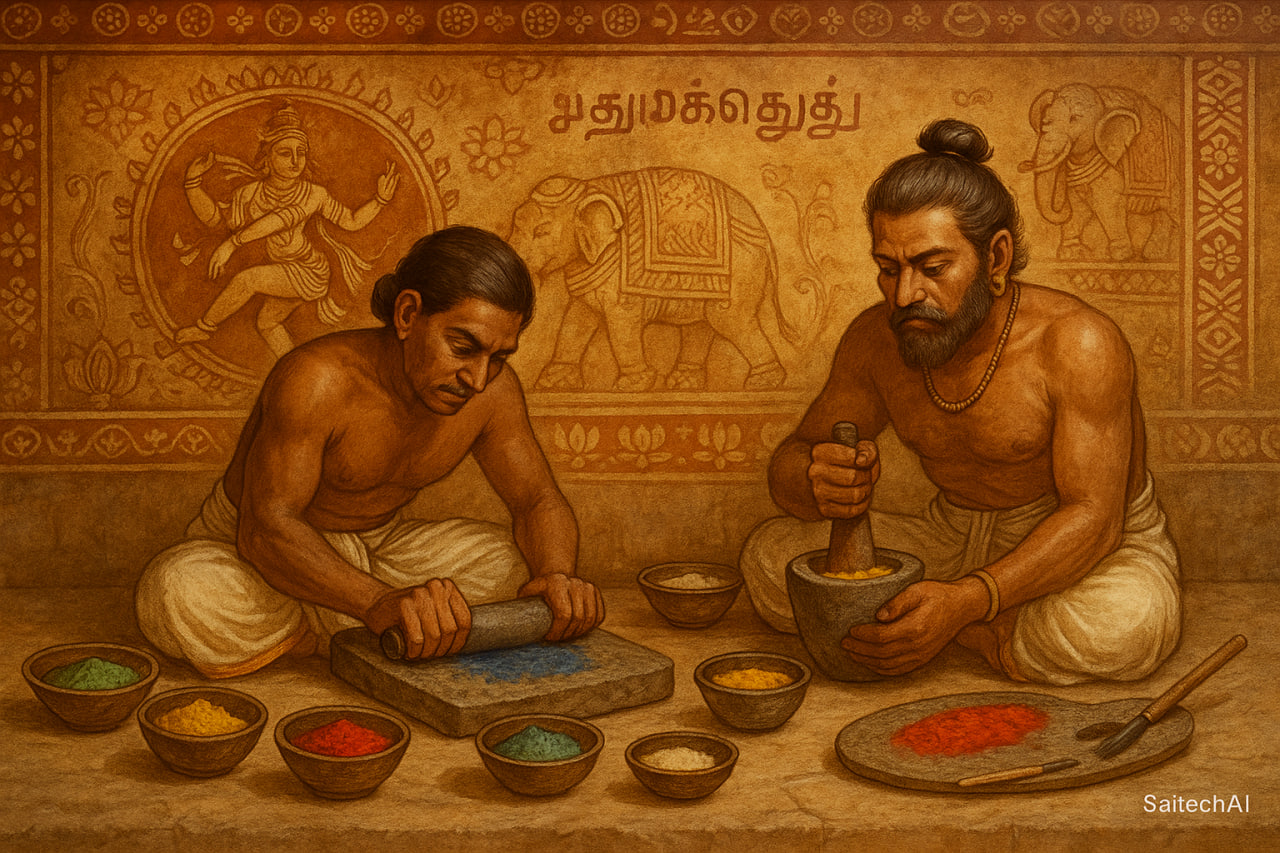
- சாயக்கூட்டுகள்: கோவில் ஓவியங்களில் இயற்கை கனிமச் சாயங்கள்.
- சிவப்பு – குருதி மணல் (Red ochre, Fe₂O₃).
- மஞ்சள் – மஞ்சள் மணல் (Yellow ochre, hydrated Fe₂O₃).
- கருப்பு – கரிச்சாணம், கரியமான் கரி (Carbon black).
6. விவசாயம் மற்றும் வேதியியல்
- சங்க இலக்கியம்: நிலம், நீர், உழவு பற்றிய குறிப்புகள்.
- உயிர்வளம் அதிகரிப்பு: மாட்டுச் சாணம், பசுநீர் (urine) – இயற்கை நைட்ரஜன் மூலப்பொருள்.
- பாசனக் கட்டமைப்பு: சோழர் காலக் கால்வாய்கள். நீரின் வேதியியல் சுத்திகரிப்பு நடைமுறைகள்.
7. கடல்சார் வர்த்தகம் மற்றும் வேதியியல்
- சோழர் காலத்தில் அரோமாட்டிக் பொருட்கள் (சாம்பிராணி, அகர்பத்தி, கற்பூரம்) தென்கிழக்கு ஆசியாவிற்குக் கொண்டு செல்லப்பட்டது.
- உப்புத்தொழில்: கடல் நீர் ஆவியாக்கம் மூலம் NaCl எடுப்பு.
- சுண்ணாம்பு எரிப்பு: CaCO₃ → CaO + CO₂.
8. தமிழ்ப் பண்டிதர்கள் மற்றும் வேதியியல் சிந்தனைகள்
- அகத்தியர்: வேதியியல் அடிப்படையிலான சித்த மருத்துவக் குறிப்புகள்.
- போகர்: நவபாசாணம் (nine-poison stone) – ஆலயம் மண்டபத்தில் விஞ்ஞான அடிப்படையில் கலவை.
- தேரையர்: மருத்துவ வேதியியல் நூல்கள்.
9. முடிவு
தமிழக வரலாற்றில் வேதியியல்:
- ஆயுதங்களில் – வூட்சு ஸ்டீல்.
- ஆடைகளில் – இயற்கைச் சாயங்கள்.
- மருத்துவத்தில் – சித்த வேதியியல்.
- கட்டிடங்களில் – சுண்ணாம்பு மற்றும் கனிமங்கள்.
- வர்த்தகத்தில் – உப்பு, சாம்பிராணி, கற்பூரம்.
இவை அனைத்தும் தமிழர் வாழ்வியலோடு கலந்து, உலகளவில் அறிவியல் முன்னேற்றத்தில் பங்களித்துள்ளன.
Article
The Evolution of Chemistry in Tamil Nadu History: A Legacy of Technology, Medicine, and Art
Dr. E. Ramanathan, PhD (Chemistry)
Abstract
This paper explores the evolution of chemistry in Tamil Nadu through multiple historical lenses—technology, medicine, art, and trade. Drawing evidence from Sangam literature, archaeological studies, metallurgical analyses of Wootz steel, ethnographic accounts of Siddha medicine, and art-history surveys of temple murals, it argues that Tamil civilization displayed a highly integrative application of chemical knowledge. A comparative perspective demonstrates both continuity with global practices (e.g., metallurgy in China, Islamic alchemy, Greco-Roman dyes) and Tamil Nadu’s unique contributions (e.g., Wootz steel, Navapasanam, organic dye technology).
1. Introduction: Chemistry Interwoven with Tamil Culture
In Tamil Nadu, chemistry (வேதியியல்) was not an abstract discipline but deeply embedded in everyday life, spanning agriculture, trade, weaponry, religious practice, and medicine. The Sangam corpus (300 BCE–300 CE) provides early poetic evidence of material transformations, while epigraphical records and temple inscriptions (e.g., Brihadeeswara temple, 1010 CE) reveal explicit applications of chemical technology. This continuity illustrates that chemistry was less a laboratory pursuit and more a lived science, transmitted across guilds, artisans, and Siddhars.
2. Metallurgy and Technological Prowess
- Wootz Steel: Tamil Nadu’s defining metallurgical achievement, ukku (Wootz), was a crucible steel with 1–2% carbon, known for its toughness and flexibility. Archaeometallurgical studies confirm export to the Middle East by 500 CE. Damascus swordsmiths prized it for its ability to hold a sharp edge and produce characteristic surface patterns.
- Comparisons: While Chinese cast iron (Han Dynasty) was brittle and European medieval steel was impure, Wootz stood out for its microstructure of carbide “bands.”
- Continuity: This technology influenced Islamic and later European metallurgy, with Michael Faraday himself experimenting on Wootz samples in 1818.
3. Organic Chemistry and the Textile Industry
Tamil textiles were technological masterpieces. Dye chemistry involved organic compounds with stable chromophores:
- Curcumin (from turmeric) → yellow tones.
- Anthraquinones (from Manjistha) → red shades.
- Indigo (from Indigofera tinctoria) → deep blue.
Evidence from Roman records (Pliny, Periplus of the Erythraean Sea, 1st CE) shows Tamil-dyed textiles traded globally. Unlike synthetic dyes (post-19th century, Perkin’s mauve), Tamil natural dyes were renewable, eco-friendly, and fast to washing and light.
4. Siddha Medicine: The Chemistry of Life and Metals
The Siddha system, attributed to sage Agathiyar and later refined by Bogar and Theraiyar, integrated mineral, metallic, and herbal chemistry.
- Bhasma preparations: finely calcined forms of gold (Swarna Bhasma), silver, mercury, and copper used for therapeutic purposes.
- Navapasanam: a legendary composite of nine minerals reputedly engineered by Bogar for temple icon-making; ethnographic accounts suggest a controlled release of trace bioactive elements into water.
- Organic formulations: Asafoetida (ferulic acid derivatives), cumin (cuminaldehyde), and ginger (gingerol) show clear correlations to antimicrobial and digestive activity.
Comparisons: While Indian Ayurveda also employed metals, Siddha was unique in its emphasis on southern flora and on laboratory-like calcination methods (puttu). Islamic alchemy (Jabir ibn Hayyan) similarly explored metallic elixirs, but Siddha anticipated many concepts of pharmacology with remarkable local adaptations.
5. Chemistry in Architecture and Art
Lime Mortar Engineering
The mixture of limestone (CaCO₃), egg white (proteins as binders), and palm juice (organic sugars) acted as a proto-polymer concrete. Raman spectroscopy on temple plasters confirms crystalline calcium carbonate binding with proteinaceous residues, showing remarkable durability (1,000+ years).
Pigment Chemistry in Murals
- Red ochre (Fe₂O₃) for vermilion hues.
- Yellow ochre (hydrated Fe₂O₃) for golden tones.
- Carbon black (soot) for outlines and shadows.
Comparisons: Ajanta murals (Maharashtra, 2nd BCE–6th CE) show similar pigments, but Tamil temples innovated by mixing herbal binders (neem oil, plant gums) that prevented fungal growth.
6. Agriculture and Water Management
Tamil farmers employed biofertilizers (cow dung → nitrogen, phosphates) and pesticidal decoctions (neem extract). Chola irrigation networks, noted in epigraphy, imply knowledge of water hardness and purification (lime settling tanks). Compared to Egyptian Nile silt farming, Tamil practice was more chemical, actively modifying soil and water chemistry.
7. Trade, Economy, and Industrial Chemistry
- Salt production: evaporation pans in the Coromandel coast represent controlled crystallization of NaCl.
- Lime burning: endothermic decomposition (CaCO₃ → CaO + CO₂) was an industry supporting construction.
- Aromatic chemicals: camphor (borneol derivatives) and frankincense (resins) were key Tamil exports to China and Southeast Asia.
8. Continuity and Global Impact
Tamil chemical knowledge was not isolated.
- Crossroads of exchange: Tamil maritime trade brought indigo to Rome, Wootz steel to Persia, and aromatics to China.
- Colonial science: European chemists in the 18th–19th centuries investigated Tamil dyes, salts, and steels, laying groundwork for industrial chemistry.
- Modern continuity: Traditional Siddha formulations remain in pharmacopoeias; natural dyes resurface in sustainable fashion; Wootz steel inspires nanostructured materials research.
9. Conclusion
Tamil Nadu’s chemical legacy integrates technology (Wootz steel), art (murals, dyes), medicine (Siddha chemistry), agriculture (biofertilizers), and trade (salt, aromatics). Far from being a peripheral craft, this knowledge constituted a holistic applied chemistry, centuries before “modern chemistry” crystallized in Europe. Recognizing Tamil contributions provides continuity to global science history and inspires modern applications in green chemistry, sustainable materials, and heritage science.
References (Select)
- Srinivasan, S. & Ranganathan, S. (2004). India’s Legendary Wootz Steel. Indian Institute of Science.
- Ramaswamy, V. (2014). Textiles and Dyes in Early South India. Economic & Political Weekly.
- Zvelebil, K. V. (1992). The Siddha Quest for Immortality. Mandrake Press.
- UNESCO Reports on Brihadeeswara Temple Murals (2008).
- Pliny the Elder. Naturalis Historia, Book XII (1st CE).
Whatsapp Feedback – இங்கே கிளிக் செய்யவும்
உங்களது வாட்ஸாப் கமெண்ட்ஸ் எங்களுக்கு மேலும் ஊக்கத்தை தரவல்லது என்பதை மறவாதீர் .